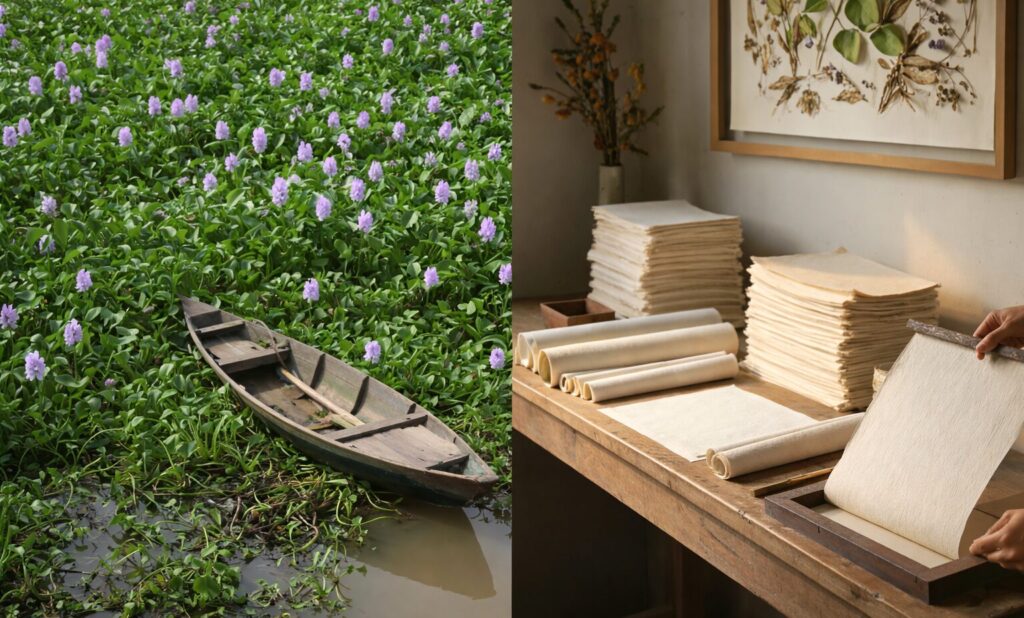

We are talking about holding history between your palms, not some crusty old relic, but a living, breathing texture that carries the scent of sunchalked cotton and the murmuring of natural fibers. Each product of handmade paper is a narrative of metamorphosis, where used cotton rags, coffee husk, or lemongrass are transformed into a canvas.
By opting for handmade rather than machine-made paper, you are not simply purchasing stationery; you are saluting an artform that has existed for millennia. But a handmade paper product is not like the impersonal, sterile factory-made sheets. It breathes, lives, interacts with its environment and ages in a way that most people would love to, but few actually know how.
Why does handmade paper need a little grid to itself?
The majority of us consider paper as a waste item. But to really understand a product made from handmade paper, you need to look at its DNA.
Handmade vs. Machine-Made: The Structural Difference
Mill-made paper is rolled under heavy rollers and usually coated with synthetics to make for a perfectly smooth, uniform surface. Unlike paper made by machine, hand-made paper is formed sheet-by-sheet in a vat of water and pulp. This gives the paper a “deckled” edge and a multidirectional fiber bond that makes the paper so strong and tactile.
The “Living” Characteristics
- Tree-Free & Fiber-Rich: Because we use materials like cotton rag, banana fiber, and agro-waste, the paper is more porous.
- Acid-Free but Sensitive: While being acid-free prevents “yellowing” from within, the lack of harsh chemical coatings means the fibers are more exposed to the elements.
- Breathability: Natural fibres respond to the surrounding atmosphere. They expand in humidity and contract in dry heat, making proper Handmade paper maintenance essential for longevity.
Identifying Your Paper Types & Their Needs
Not every handmade paper product is created equal. The source fiber dictates how you should handle it:
- Cotton Rag Paper: Cotton rag paper is a rough and durable paper, similar to cloth. It lifts and flows beautifully with ink, but will absorb moisture from the air if left in a damp environment.
- Agro-Waste Paper (Coffee, Lemongrass, Corn): These are generally much bumpier and have botanical matter soaking in and visible inclusions. Natural pigments are more vulnerable to direct, harsh sunlight, which can cause them to fade.
- Seed Paper: This may be the most fragile of the handmade paper items. It has live seeds in it, so you must keep it bone dry till you plant it, or you will end up with a busted seed paper!
Cleaning & Maintenance: The Dos and Don’ts
When it comes to Handmade paper maintenance, the “less is more” rule applies.
The Dos
- Dust Often: With a soft-bristled brush (a clean makeup brush works great!) gently whisk dust off the surface.
- Full Disclosure: Love-looking hands need love-clean hands. Everyday hands with the natural oils of life’s day-to-day activities on them can make fingermarks on your stationery that you won’t be able to remove from your premium paper.
- Choose Acid-Free Adhesives: When out scrapbooking, make sure your tapes and adhesives are pH balanced and acid free so you don’t end up staining your fibers.
The Don’ts
- No Liquid Cleaners: Never use water, glass cleaner, or damp cloths. It will break down the hydrogen bonds between the fibers and warp the sheet.
- No Rubber Erasers: Vigorous erasing can “pill” the surface of the paper. Use a soft, kneaded eraser if necessary.
How to Store Handmade Paper for Longevity
If you are a collector or an artist, knowing how to store handmade paper is the difference between a pristine sheet and a ruined one.
- Flat is Best: Store sheets flat in a portfolio or in a shallow drawer. When stored upright, the edges can curl or “slump” over time with gravity and humidity.
- Climate Control (Temperature & Humidity): Store your paper in a cool, dry environment. Don’t use the basement or attic, where temperatures are extreme.
- Darkness is a Friend: UV rays are a bane for natural dyes. To avoid fading, do not expose your handmade paper product to direct sunlight through a window.
- Interleaving: With heavily textured or painted stock, separate sheets with a page of acid-free tissue to minimize “burn-off” or texture transfer.

Caring for Finished Products: Journals, Lamps, and Boxes
A handmade paper product isn’t necessarily a flat sheet. It might be a journal, a gift box, or a lampshade.
- Journals: Don’t overfill your handiwork journals with bulky mementoes, as that can put pressure on the hand-stitched binding.
- Lampshades: Only use LED bulbs. They produce very little heat compared to traditional bulbs, so the fibers are not exposed to heat that could make them brittle.
- Home Decor: With any paper-based wall decor, always frame under UV-protective glass to keep the colors bright for decades.
Common Mistakes to Avoid
In our years of crafting, we’ve seen a few recurring errors in Care for Handmade Paper:
- With Plastic Sleeving: Cheap plastic (PVC) can off-gas and make paper yellow or brittle. Use polypropylene or archival safe sleeves.
- Storing Near Potted Plants: Transpiration from plants increases humidity in the immediate area, which can cause foxing (tiny brown spots) on paper.
- Extreme flattening: You want flat, but a heavy, dirty weight directly on the paper can crush the lovely natural texture.
Sustainability: Caring is a Form of Conservation
In the heart, opting for a handmade paper product is a green statement. With appropriate Handmade paper care, you are prolonging the life of an earth friendly product that saves trees, uses less water and helps rural communities.
Lifetime products do not end up in landfills. Looking after your paper is the last act in the sustainable circle that started with a little waste fibre in our factory.
A Legacy in Every Sheet
At Bluecat Paper, we create more than just stationery; weaculture experiences. All of our handmade paper product are a combination of traditional knowledge and contemporary sustainability. When you invest the time in caring for them, you are not just maintaining an object, you are preserving the narratives, the sketches, and the mementos encapsulated in those fibers.
Thank you for choosing handmade. In cherishing the slow, purposeful art of papermaking, you enable us to preserve this beautiful craft for future generations.